

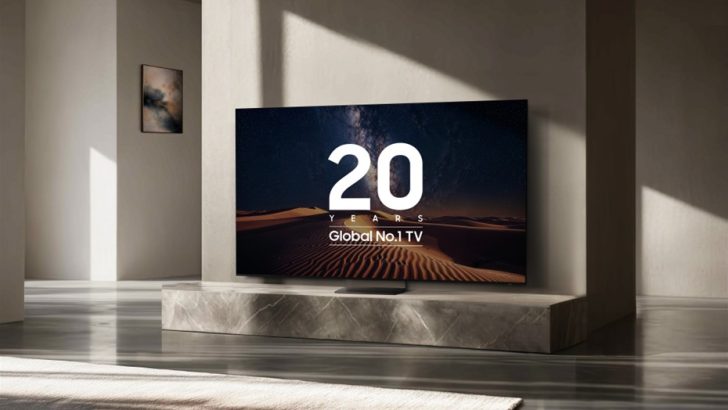
Samsung Electronics Marks 20 Consecutive Years as the World’s No.1 TV Brand
Executive Summary
Samsung Electronics has achieved a remarkable milestone, marking 20 consecutive years as the world's number one TV brand. This accomplishment is a testament to the company's commitment to innovation, quality, and customer satisfaction. As the Chief Growth Officer at Menshly Biz, I am excited to analyze the factors that have contributed to Samsung's success and explore how the company can continue to drive growth, scalability, and return on investment (ROI) in 2026. In this report, we will examine Samsung's leadership in the TV market, its strategies for maintaining a competitive edge, and the opportunities and challenges that lie ahead.
Introduction to Samsung's Success
Samsung Electronics has been a dominant player in the global TV market for two decades, with a strong brand reputation, innovative products, and a robust distribution network. The company's success can be attributed to its ability to adapt to changing consumer preferences, invest in research and development, and expand its product portfolio to cater to diverse customer needs. Samsung's commitment to quality, design, and technology has enabled it to maintain a leadership position in the market, with a wide range of TV models that offer exceptional picture quality, smart features, and sleek designs.
Scalability and Growth Strategies
To maintain its leadership position and drive growth in 2026, Samsung will need to focus on scalability, innovation, and strategic partnerships. The company can leverage its global presence, extensive distribution network, and strong brand recognition to expand its market share and reach new customers. Samsung can also explore new business models, such as TV-as-a-service, to provide customers with flexible and affordable options for accessing premium TV content. Furthermore, the company can invest in emerging technologies like 5G, artificial intelligence (AI), and the Internet of Things (IoT) to develop innovative TV solutions that enhance the viewing experience and provide new revenue streams.
Return on Investment (ROI) Analysis
Samsung's investment in research and development, marketing, and distribution has yielded significant returns, with the company generating substantial revenue from its TV business. To maintain a high ROI in 2026, Samsung will need to optimize its operations, reduce costs, and improve efficiency. The company can achieve this by implementing lean manufacturing processes, streamlining its supply chain, and leveraging data analytics to inform product development and marketing decisions. Additionally, Samsung can explore new revenue streams, such as advertising, content creation, and subscription-based services, to diversify its business model and increase profitability.
🎥 Executive Training Session
Leadership and Competitive Advantage
Samsung's leadership in the TV market is driven by its commitment to innovation, quality, and customer satisfaction. The company has a strong track record of introducing new technologies and features that enhance the viewing experience, such as QLED, 8K, and HDR. Samsung's focus on design, usability, and affordability has also enabled it to cater to a wide range of customers, from budget-conscious consumers to premium buyers. To maintain its competitive advantage, Samsung will need to continue investing in research and development, expanding its product portfolio, and strengthening its brand reputation through effective marketing and customer engagement strategies.
Market Trends and Opportunities
The TV market is evolving rapidly, with changing consumer preferences, new technologies, and shifting business models. In 2026, Samsung can capitalize on trends such as the growth of streaming services, the rise of smart homes, and the increasing demand for sustainable and energy-efficient products. The company can also explore new opportunities in emerging markets, such as Africa, Latin America, and Southeast Asia, where there is a growing demand for affordable and feature-rich TVs. Furthermore, Samsung can leverage its expertise in 5G, AI, and IoT to develop innovative TV solutions that integrate with other devices and services, providing a seamless and connected viewing experience.
Challenges and Risks
Despite its success, Samsung faces several challenges and risks in the TV market, including intense competition from rival brands, changing consumer preferences, and shifting business models. The company will need to navigate these challenges by innovating continuously, expanding its product portfolio, and strengthening its brand reputation. Samsung will also need to address concerns around sustainability, energy efficiency, and social responsibility, as consumers become increasingly environmentally conscious and socially aware. Additionally, the company will need to mitigate risks associated with global economic uncertainty, trade tensions, and supply chain disruptions, which can impact its operations and profitability.
Conclusion and Recommendations
In conclusion, Samsung Electronics' 20 consecutive years as the world's number one TV brand is a testament to the company's commitment to innovation, quality, and customer satisfaction. To maintain its leadership position and drive growth in 2026, Samsung will need to focus on scalability, ROI, and leadership, while navigating the challenges and risks in the TV market. We recommend that Samsung continue to invest in research and development, expand its product portfolio, and strengthen its brand reputation through effective marketing and customer engagement strategies. The company should also explore new business models, such as TV-as-a-service, and leverage emerging technologies like 5G, AI, and IoT to develop innovative TV solutions that enhance the viewing experience and provide new revenue streams. By doing so, Samsung can maintain its competitive advantage, drive growth, and remain the world's number one TV brand for years to come.
The Menshly Biz Mission
Helping modern founders navigate the complexities of AI-driven business models and remote-first culture. Part of the Menshly Digital Media Group.
Follow @Olhmescraxes1





0 Comments